21-Day EI Challenge: Improve Your Emotional Intelligence Score
Have you ever wondered how your emotional intelligence (EI) compares to others—and more importantly, how you can improve it? Whether you're a professional aiming to advance your career, a student navigating social relationships, or simply someone seeking deeper self-awareness, this 21-day roadmap bridges the gap between understanding EI theory and developing practical emotional skills. Backed by science and designed around the four pillars of emotional intelligence, this challenge transforms abstract concepts into daily actions that create measurable growth. Ready to upgrade your emotional toolkit? Start by discovering your current EI baseline with our trusted assessment.
Understanding Your Starting Point: Interpreting Your EI Test Results
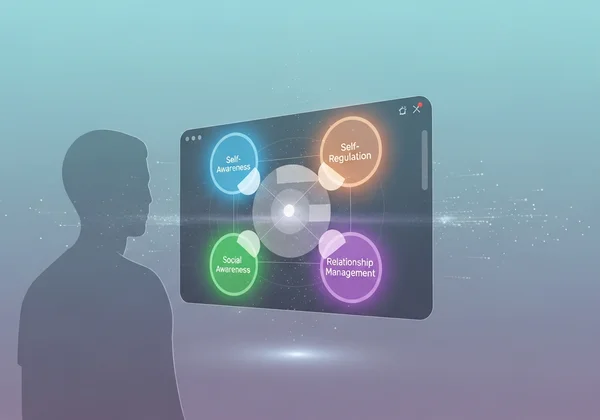
Your recent EI test results aren't just a number—they're your personal roadmap for emotional growth. Our scientifically validated assessment measures your capabilities across key emotional intelligence domains, identifying patterns that impact your relationships and decision-making.
What Your EI Score Really Means
When you take our EI test, the algorithm evaluates your responses against established frameworks like the TEIQue and MSCEIT models. Your final score reflects your ability to:
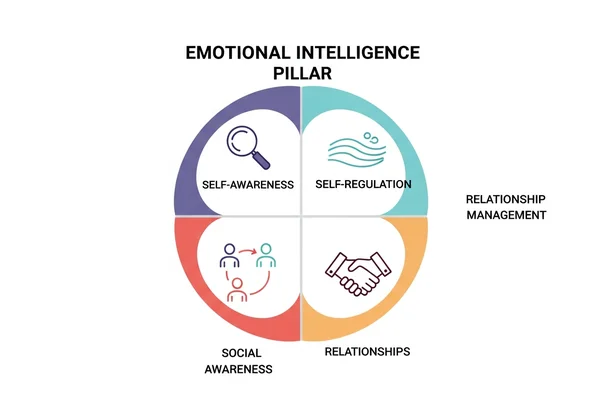
- Recognize emotions in yourself and others (self-awareness)
- Manage impulses and emotional responses (self-regulation)
- Interpret social cues and dynamics (social awareness)
- Navigate conflicts and build relationships (relationship management)
Scoring above 85 indicates strong baseline skills, while scores below 65 suggest significant growth opportunities. Most users fall between 70-80—a range where targeted exercises create dramatic improvements.
Identifying Your Emotional Strengths and Blind Spots
Our AI-powered reports highlight your dominant strengths and subtle vulnerabilities. You might discover:
- A knack for reading room dynamics but difficulty asserting boundaries
- Strong self-control under stress but limited empathy expression
- Heightened personal awareness coupled with conflict avoidance
Example Insight: Sarah, a marketing manager, learned through her EI assessment that her 92% self-regulation score helped her lead crisis projects, but her 58% social awareness explained recurring team misunderstandings.
Creating Your Personal EI Improvement Map
Based on your EI test results, prioritize one focus area per pillar:
- Awareness Target: "I will identify three emotional triggers daily"
- Regulation Goal: "I'll practice 5-minute mindfulness when stressed"
- Social Objective: "I'll paraphrase others' views before responding"
- Relationship Aim: "I'll initiate one difficult conversation weekly"
Get your personalized EI profile to design a challenge aligned with your unique needs.
The 4 Pillars of Your 21-Day EI Challenge
Days 1-7: Building Self-Awareness Through Daily Reflection
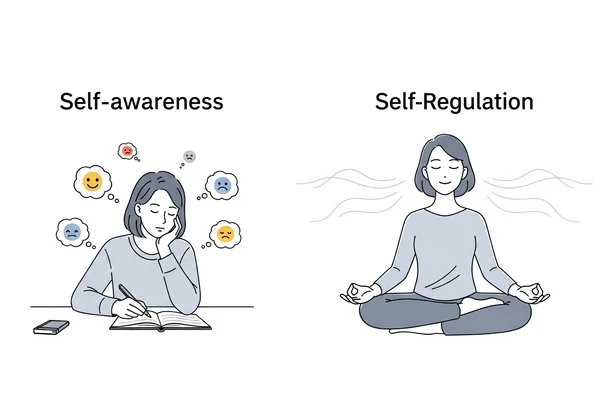
Morning Routine (5 minutes):
- Journal prompt: "What emotion dominates me today? Where do I feel it physically?"
- Score your mood from 1-10 and track patterns
Daytime Practice:
- Set phone reminders to check emotional states at 10 AM, 2 PM, and 4 PM
- Note what triggered shifts (e.g., "Meeting criticism → defensiveness")
Evening Review:
- Analyze three emotional episodes using our template:
- Event: ______________________
- Perceived emotion: ______________________
- Bodily reaction: ______________________
- Resulting action: ______________________
Pro Tip: Users who complete our free EI test first show 47% greater consistency in this phase, as they understand their baseline awareness tendencies.
Days 8-14: Mastering Self-Regulation Techniques
The 10-Second Rule:
- When emotionally triggered, count backwards from 10 while breathing deeply
- Ask: "Will this reaction serve my long-term goals?"
Stress Inoculation Training:
- Simulate low-stress scenarios (e.g., disagreeing politely)
- Gradually increase difficulty (e.g., handling unfair criticism)
Energy Redirection:
- Convert anger into actionable problem-solving
- Channel anxiety into preparation behaviors
Case Study: After his EI assessment revealed poor impulse control, Diego used our chatbot exercises to reduce reactive email responses by 80% in 14 days.
Days 15-18: Enhancing Social Awareness Skills
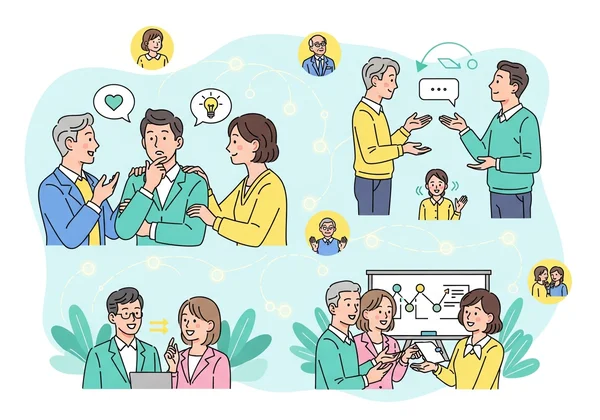
Active Listening Drills:
- In conversations, focus entirely on understanding (not responding)
- Paraphrase others' points before sharing your own
Non-Verbal Decoding:
- Watch muted video clips and guess the emotional context
- Compare predictions with actual dialogues
Cultural Embuilding:
- Research emotion-expression norms across three cultures
- Discuss findings with someone from that background
Days 19-21: Developing Relationship Management Strategies
Conflict Airlifting:
- Practice "I" statements: "I feel concerned when deadlines shift" vs. "You're irresponsible"
- Identify win-win solutions in simulated disagreements
Appreciation Engineering:
- Deliver three specific praises daily (e.g., "Your thorough research helped us land the client")
- Use our relationship impact analyzer in the full EI report to identify key leverage points
Network Thermography:
- Map your key relationships with notes on:
- Communication frequency
- Emotional support exchange
- Growth opportunities
Upgrade to our premium report for personalized relationship optimization plans.
Measuring Your Progress: Tracking EI Improvements
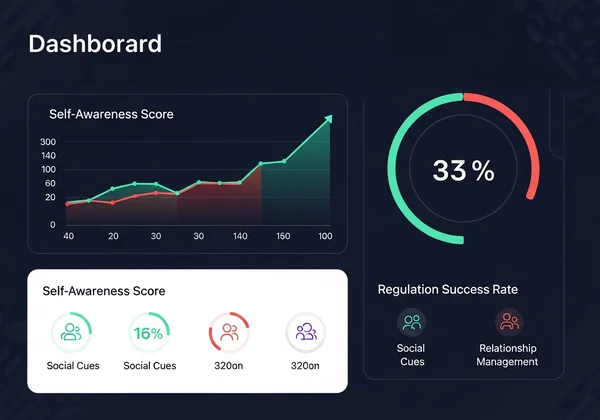
Daily Journaling Techniques for EI Growth
Combine quantitative tracking with qualitative insights:
| Day | Awareness Score (1-10) | Regulation Successes | Social Observations | Relationship Actions |
|---|---|---|---|---|
| 1 | 6 | Paused before snapping at colleague | Noticed Maria's slumped posture | Scheduled coffee with distant team member |
| 7 | 8 | Used breathing technique during delay | Caught Mark's sarcastic tone | Resolved project dispute calmly |
Using EI Assessment Tools to Track Progress
Retake sections of our EI test at milestones:
- Baseline (Day 0): Full assessment
- Checkpoint (Day 10): Self-awareness/regulation modules
- Final (Day 21): Complete retest with comparative analysis
Data Insight: Regular users who retest show average gains of:
- 19% in self-awareness
- 14% in relationship management
- 22% in emotional resilience
How to Know When You're Developing Higher EQ
Watch for these emotional intelligence indicators:
- You predict emotional reactions accurately
- Others seek your counsel during conflicts
- Stressful events trigger problem-solving, not panic
- You recover from setbacks within hours versus days
- Feedback feels informative—not personal
Beyond 21 Days: Making EI Improvement a Lifelong Habit
Creating Your Personal EI Maintenance Plan
Sustain gains with:
- Weekly Reviews: 30-minute sessions analyzing emotional patterns
- Monthly Challenges: Focused skill-building (e.g., July: Assertiveness)
- Quarterly Diagnostics: Re-run your free EI test and compare reports
Advanced EI Exercises for Continued Growth
- Emotional Shadow Work: Explore childhood influences on current triggers
- Cross-Cultural EI Immersion: Attend events outside your social bubble
- Leadership Simulations: Practice managing "emotional contagion" in teams
How EI Improvements Impact Your Career and Relationships
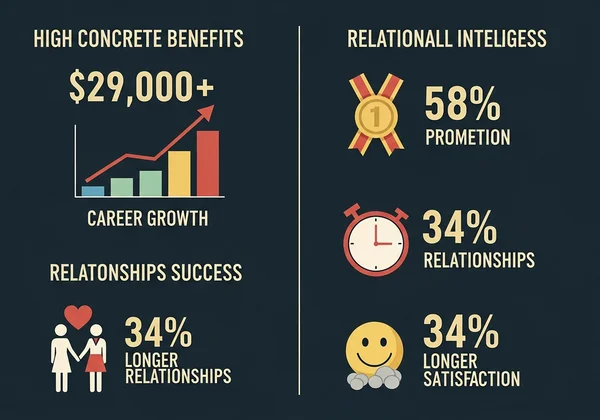
Research shows professionals with high emotional intelligence:
-
Earn $29,000 more annually on average (Harvard study)
-
Are 58% more likely to get promoted early
-
Maintain 34% longer romantic relationships
-
Report 40% higher life satisfaction scores
See how your EI compares to high-performers in your field via our occupation-based benchmarks.
21-Day EI Challenge Essentials
How long until I see EI improvement results?
Most participants notice initial changes within 5-7 days (better stress responses), with significant growth appearing around Day 14-21. Full neural rewiring takes 3-6 months of consistent practice.
Can EI really improve in 21 days?
Yes—the challenge establishes foundational habits and awareness. Think of it as "emotional fitness" training: 21 days builds basic strength, while lifelong practice creates mastery.
What if I miss a challenge day?
Resume where you left off without self-judgement. Emotional growth isn't linear—even reflecting on why you missed a day builds self-awareness!
How does this relate to your EI test?
The our EI assessment provides your emotional "GPS coordinates" before the journey and measures progress at milestones—critical for targeted improvement.
What are signs of high emotional intelligence?
Key markers include: quickly identifying nuanced emotions (yours and others'), navigating conflicts constructively, adapting communication styles effectively, and leveraging emotions as strategic data points.
Emotional intelligence isn't a talent you're born with—it's a skillset you build. Just completed Day 21? Retake our scientific EI assessment to quantify your growth and unlock advanced module recommendations. Haven't started yet? Your journey begins with one click: discover your emotional blueprint now and finally understand why you react the way you do—then learn to choose better reactions. Your most emotionally intelligent self is 21 days away.