How to Decode Your EI Test Results: A Complete Guide to Understanding Your Emotional Intelligence
The moment you receive your EI test results, a wave of questions emerges: What do these scores really mean? How do they translate to real-world emotional intelligence? What should you do next? Receiving a score is only the first step of your journey. To truly grow, you must learn how to turn those numbers into a roadmap for a better life.
How do you turn a simple score into a life-changing insight? We'll cut through the confusion and show you exactly how to translate those numbers into real-life improvements that matter to you. Whether you are looking to improve your career, your marriage, or your own mental clarity, understanding your results is the key. Before we dive deep into the data, you can begin your emotional assessment to get your current baseline.
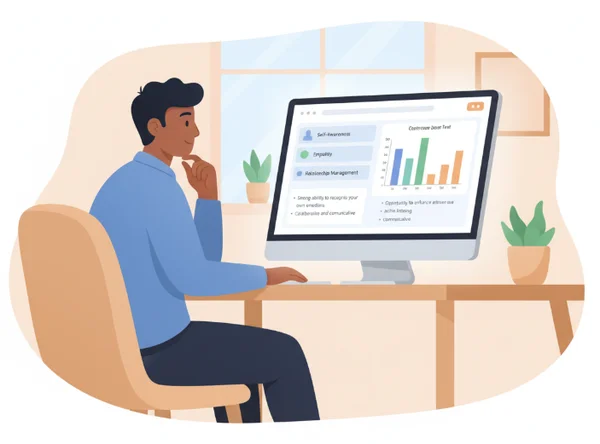
In the following sections, we will break down the science of scoring and the practical steps you can take today. Our goal is to make emotional intelligence (EI) accessible, practical, and highly rewarding for your daily life.
Decoding Your Emotional Intelligence Scores
When you look at your EI test results, you are seeing a snapshot of your current emotional skills. Unlike IQ, which tends to remain stable throughout your life, your EI score is dynamic. This means you can actually improve it with consistent practice and focused attention. Understanding the math behind the score helps you see where you stand in relation to the rest of the world.
What Do Your EI Score Percentiles Really Mean?
Many users feel confused when they see a "percentile" rather than a simple percentage. In the world of emotional intelligence assessment, a percentile tells you how you compare to other people. For example, if you are in the 70th percentile, it means you scored higher than 70% of the people who have taken the test.
It is important to remember that a "lower" score is not a failure. Instead, it is a discovery of a "growth area." Some people are naturally gifted in recognizing emotions but struggle to control them. Others might be excellent at staying calm under pressure but fail to notice how their words affect others. Your your emotional assessment results highlight these specific patterns so you can stop guessing and start growing.
How to Benchmark Your EI Against Industry Standards
A common question many professionals ask is: "What is a good EI score?" While there is no single "perfect" number, industry standards suggest that people in leadership roles often score higher in social awareness and relationship management. If you are a student or a new employee, your scores might be more balanced across self-awareness.
Benchmarking allows you to see if your emotional skills match your career goals. For instance, a high-level manager needs a high score in conflict resolution and empathy to lead a team effectively. By comparing your personal EI test outcomes to these professional benchmarks, you can identify which skills will help you get that next promotion or lead your team to success.
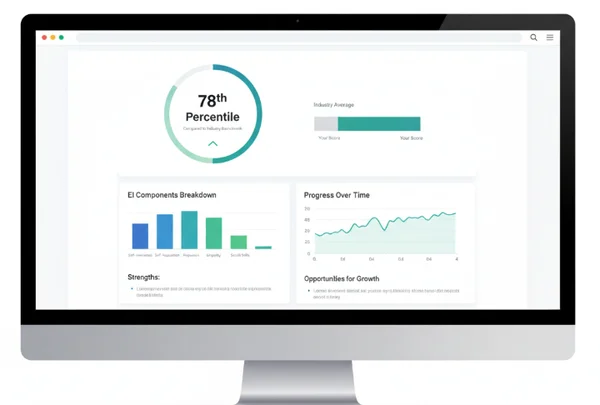
Interpreting Your EI Assessment Profile Components
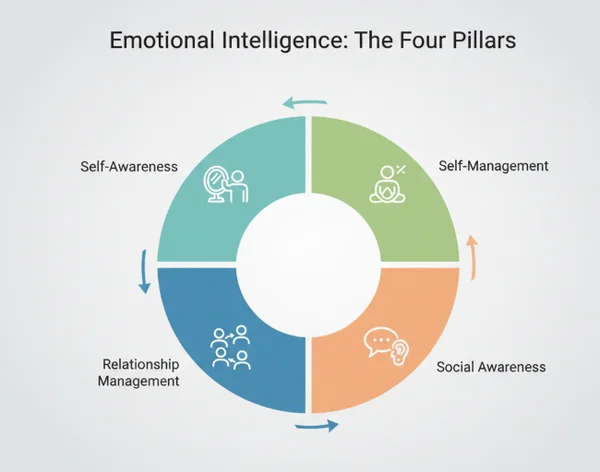
A quality emotional intelligence test provides more than just a single score. It evaluates multiple aspects of your personality, creating a comprehensive picture of your emotional strengths and areas for growth. At Eitest, we use a framework inspired by leading scientific models to give you a 360-degree view of your emotional health. Understanding these components is the only way to make sense of a complex human personality. You can find these details in a comprehensice EI evaluation of your performance.
Understanding Self-Awareness in Your EI Profile
Self-awareness is the foundation of all emotional intelligence. If you cannot identify what you are feeling, you cannot hope to manage those feelings. In your profile, a high self-awareness score indicates that you are "in tune" with your internal state. You know when you are becoming angry, sad, or anxious before those emotions take control.
If your score in this area is lower than you expected, don't worry. Most people live on "autopilot." Improving this score involves practicing mindfulness and learning to label your emotions. Instead of just feeling "bad," you learn to identify if you are feeling "disrespected," "overwhelmed," or "lonely." This clarity is the first step toward emotional freedom.
Analyzing Your Self-Management Capabilities
After identifying your emotions, the next step is deciding how to respond. Self-management is the skill of controlling impulsive reactions and adjusting to changing situations effectively. People with high self-management scores are often described as "composed" or "level-headed."
In a professional setting, self-management is what prevents you from sending an angry email to a client or losing your temper during a stressful meeting. If your detailed emotional report shows a need for improvement here, it usually means you need better "emotional filters." Learning to pause between a feeling and an action is a superpower in the modern workplace.
Social Awareness: Reading Emotional Cues
Social awareness is your "emotional radar." It is your ability to pick up on the emotions of others and understand the "vibe" of a room. This pillar is heavily tied to empathy. High scores here mean you are good at active listening and observing non-verbal cues, such as body language and tone of voice.
For those in sales, healthcare, or teaching, social awareness is vital. It allows you to meet people where they are. If your score is low, you might be missing subtle signs that a friend is upset or a colleague is frustrated. Developing this skill involves stepping outside of your own head and focusing purely on the person in front of you.
Relationship Management: Building Connections
The final pillar is relationship management. This is the culmination of the other three skills. It is how you use your awareness of yourself and others to handle interactions successfully. This includes your ability to inspire others, manage conflict, and build strong, lasting bonds.
High relationship management scores are common in great leaders and mentors. It shows that you can navigate difficult conversations without burning bridges. If you find your personal relationships are often rocky, focusing on this component of your profile can lead to more harmony at home and more influence at work.
Creating a Personalized EI Development Plan
Numbers alone won't change anything—it's what you do with them that counts. Once you have decoded your scores, the real work begins. Creating a development plan is about taking those "growth areas" and turning them into daily habits. You don't need to change everything at once; you just need to be consistent.
Setting Realistic EI Improvement Goals
Many people make the mistake of trying to become an "emotional master" overnight. This leads to burnout. Instead, look at your lowest-scoring pillar and set a SMART goal (Specific, Measurable, Achievable, Relevant, Time-bound).
For example, if your self-awareness score was low, a realistic goal might be: "For the next two weeks, I will use a journal for five minutes every evening to record three emotions I felt during the day." This is much more effective than a vague goal like "being more aware." Small wins lead to big changes in your overall EQ score over time.
Targeted Exercises for Each EI Component
To see real movement in your results, you need specific exercises. Here are a few tried-and-tested methods for each pillar:
- Self-Awareness: Use the "Three Whys" technique. When you feel a strong emotion, ask yourself why you feel that way. Then ask why again, and once more. This digs down to the root cause.
- Self-Management: Practice the "Box Breathing" technique during stress. Inhale for 4 seconds, hold for 4, exhale for 4, and hold for 4. This resets your nervous system.
- Social Awareness: Practice "Active Listening." In your next conversation, don't think about your response while the other person is talking. Focus 100% on their words.
- Relationship Management: Give "Specific Praise." Instead of saying "Good job," tell someone exactly what they did well and why it helped.
Tracking Your EI Development Progress
How do you know if you are actually getting better? Emotional growth can be subtle. One way to track progress is to retake a standardized EI test online every three to six months. This gives you concrete data to see if your scores are rising.
Another way to track progress is to keep a "Success Journal." Note down times when you handled a difficult situation better than you would have in the past. Did you stay calm when someone cut you off in traffic? Did you handle a critique from your boss without getting defensive? These are the real-world markers of a rising EI.
Your Next Steps in Emotional Intelligence Development
Your EI test results serve as a personal roadmap, highlighting both your emotional strengths and opportunities for growth. You now know where you are strong and where you have the potential to grow. Remember, emotional intelligence is not a destination; it is a lifelong practice of becoming more human, more connected, and more effective.
The most successful people in the world aren't just the smartest (high IQ); they are the ones who can navigate the complex world of human emotions (high EQ). By decoding your scores and following a development plan, you are setting yourself up for better relationships, higher career satisfaction, and a deeper sense of peace.
Ready to apply these insights to your own emotional intelligence journey? Access your assessment tool today to receive your personalized profile and development roadmap. Your future self will thank you for the investment you make in your emotional health today.
Frequently Asked Questions About EI Test Results
What is a good EI score?
There is no "perfect" score, but most people fall between 90 and 110. A score above 120 is considered high, indicating strong emotional skills. However, the most important part of your score is the balance between the different pillars. You can check your personal scores and compare them to our global database for a better perspective.
How to improve emotional intelligence effectively?
The most effective way is through consistent, small habits. Focus on one pillar at a time. Start with self-awareness by practicing mindfulness or journaling. Once you understand your own triggers, you can move on to self-management and social skills.
How can an EI test help my career advancement?
Employers today look for "soft skills" more than ever. A high EI score shows that you can lead teams, handle stress, and communicate effectively. Using leadership assessment tools helps you identify the specific leadership qualities you need to develop to reach the executive level.
What are the 4 pillars of emotional intelligence and how do they relate to my results?
The four pillars are Self-Awareness, Self-Management, Social Awareness, and Relationship Management. Your test results break your performance down into these categories so you can see exactly which part of your emotional life needs the most attention. Understanding these pillars helps you move from a broad "score" to a specific action plan.