Leadership EI Tests: Building High-Performance Teams
In the modern workplace, technical skills are no longer the only factor for success. Many managers lead teams of brilliant individuals who still struggle to meet goals. Why does this happen? Often, the missing piece is emotional intelligence. Have you ever wondered why some teams stay calm under pressure while others fall apart? The answer usually lies in how well team members understand and manage their emotions.
An emotional intelligence test, or EI test, is a powerful tool that helps leaders look beneath the surface. It provides data on how people react to stress, how they communicate, and how they solve problems together. By using an online leadership-focused EI assessment, leaders can move away from guesswork and start making decisions based on real human insights.
This article explores how emotional awareness can transform your leadership style. We will look at the science of emotional intelligence and how you can use results to build a more resilient, high-performing team. Whether you are a talent manager shaping tomorrow’s leaders or a department head, understanding EI is your first step toward better management.
Why EI Testing is Essential for Modern Leadership
Leadership has changed significantly over the last decade. Command-and-control styles are being replaced by collaborative, empathetic approaches. In this environment, a leader’s emotional intelligence score is often a better predictor of success than their IQ. High-performing teams are not just groups of smart people; they are groups of emotionally aware people.
The Science Behind EI and Leadership Effectiveness
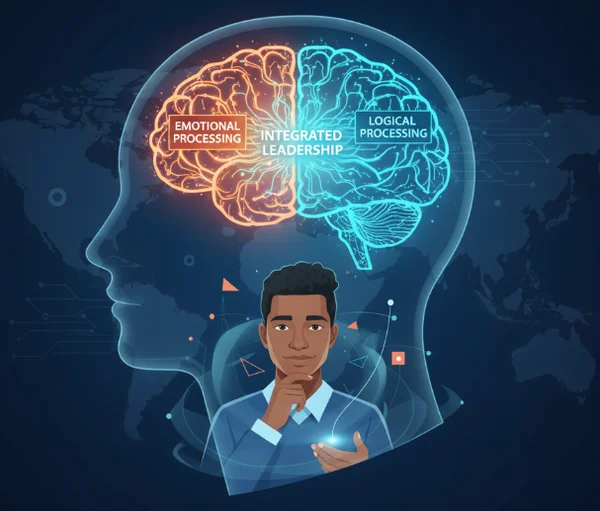
The science of emotional intelligence is rooted in how our brains process information. Our emotional brain reacts to challenges faster than our logical brain. This ‘hijacking’ can derail leaders mid-meeting. Recognizing these triggers builds psychological safety—the bedrock of innovation.
Research, popularized by psychologists like Daniel Goleman, shows that leaders who take a leadership EI assessment are more likely to recognize these triggers. By understanding the biology of emotions, leaders learn to pause and respond thoughtfully rather than reacting impulsively. This stability creates a supportive environment where employees feel safe to share ideas without fear of retribution.
How Top Organizations Are Implementing EI Assessments
The world's most successful companies now use a professional evaluation during their hiring and development phases. They realize that a "toxic" high-performer can destroy team morale. EI assessments reveal candidates’ soft skills alongside qualifications. This data lets managers create targeted strategies, like empathy-building workshops, not vague ‘teamwork’ platitudes.
Talent managers use these tests to create "emotional maps" of their departments. If a team is low on empathy but high on drive, the manager knows they need to focus on relationship-building exercises. This data-driven approach to human behavior ensures that leadership development is a measurable strategy rather than a vague concept.
Interpreting Your Team's EI Profile: A Manager's Guide
Once your team has taken a comprehensive emotional intelligence test, you will have a wealth of data. However, data is only useful if you know how to read it. As a manager, your goal is to look for patterns. Are there common strengths? Are there shared blind spots that might be causing friction during projects?
Key Metrics to Analyze in Your EI Report
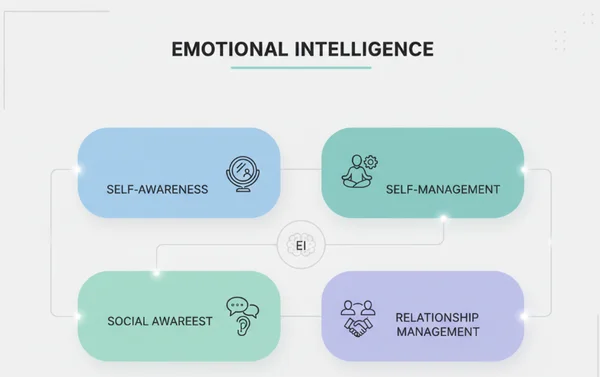
Most scientific models of emotional intelligence are built on four core pillars. Understanding these helps you see where your team stands:
-
Self-Awareness: Can your team members identify their own emotions? A self-aware team knows when they are reaching burnout and can communicate their needs before a crisis occurs.
-
Self-Management: This is the ability to control impulsive feelings. It develops over time through intentional practice and is essential for staying productive during tight deadlines.
-
Social Awareness: This involves empathy. It is the ability to "read the room" and understand the emotions of colleagues, which is vital for global or remote teams.
-
Relationship Management: This is about influence, conflict management, and teamwork. It is the visible result of the other three pillars working in harmony.
Mapping Scores to Real-World Team Behaviors
By checking the review your team’s emotional strengths section for each pillar, you can see exactly where communication is breaking down. For example, a team with high self-management but low social awareness might work very hard but constantly offend each other.
Map your team’s emotional patterns to uncover hidden productivity gaps. If a project manager scores low in relationship management, they may struggle to gain buy-in for new initiatives. Identifying this early allows for coaching that focuses on persuasive communication rather than technical project tracking.
Creating Actionable Development Plans Based on Team EI Scores
The most important part of testing is what happens next. You should use actionable performance data to create a roadmap for growth. Our platform provides AI-driven reports that offer personalized advice for each individual. As a leader, you can use these insights to set specific goals.
If the report shows low scores in conflict management, you might schedule a workshop on "difficult conversations." If the team lacks self-awareness, you might introduce a "check-in" at the start of meetings to discuss how everyone is feeling. The goal is to turn the score into a daily habit of better behavior.
Real-World Applications of EI Testing
To see the real power of an emotional intelligence framework, we can look at common workplace scenarios. These stories show how a shift in emotional awareness leads to a shift in business results.
Case Study 1: Turning Conflict into Collaboration
A regional sales team was consistently missing targets. The problem wasn't their product knowledge; it was the constant infighting. The top two sales reps were extremely competitive and refused to share leads or advice. The manager decided to have the whole team undergo an EI evaluation.
The results showed that while the team was highly driven, their "social awareness" scores were in the bottom 20%. They simply didn't value how their actions affected others. Following Daniel Goleman's principles of social skill development, the manager changed the bonus structure to reward team-based goals. They also held "empathy sessions" where reps had to solve problems for each other. Within six months, the team culture shifted from "me" to "us," and sales increased by 15%.

Case Study 2: Reducing Team Turnover
An IT department was suffering from high turnover. Talented engineers were leaving after just one year. Exit interviews suggested that they felt "unheard" and "undervalued" by the department head. The department head was a brilliant coder but had never received any emotional training.
The leader took a behavioral profile and discovered his "relationship management" score was very low. He realized he was focusing entirely on technical tasks and ignoring the people doing them. He used his AI-powered report to learn how to give better feedback. He started "listening tours" where he spent time understanding his employees' career goals. Turnover dropped by 40% in the following year because the staff finally felt like their leader cared about them as people.
Leadership Excellence Through Emotional Awareness
Leadership excellence starts with emotional awareness—your team’s EI profile is the roadmap. Building a high-performance team is not a one-time event; it is a continuous process of growth. Technical skills might get your team the job, but emotional intelligence is what helps them keep it and excel.
By understanding the science behind emotions and interpreting your team's unique profile, you can solve conflicts before they start and keep your best talent engaged. Don't leave your team's success to chance. You can start your leadership journey today and begin the transition toward more effective, human-centric management.
Frequently Asked Questions About EI Tests for Leadership
How accurate are EI tests for predicting leadership success?
Scientific research suggests that emotional intelligence is a high predictor of leadership success, often more so than IQ. While no test is 100% perfect, a validated EI test provides a very reliable baseline. It measures behavioral tendencies and self-regulation, which are the exact skills needed to manage people effectively.
What is a good EI score for managers?
There isn't a single "perfect" score, as different roles require different emotional strengths. However, a "good" score for a manager is usually one that shows balance across the four pillars. Ideally, a manager should score above average in social awareness and relationship management. Balanced scores indicate that a leader can push for results while still maintaining a healthy team culture.
Can EI tests help identify high-potential employees?
Yes. Many companies use these assessments for entry-level workers to find future leaders. "High-potential" employees are usually those who show an early ability to manage their stress and collaborate well with others. These traits suggest they will handle the pressures of management better than those who are purely technically focused.
How often should teams take EI assessments?
Emotional intelligence is a skill that develops over time through practice. Therefore, it is helpful to reassess once a year. This allows the team to see if their development plans are working and to adjust their goals as the team dynamic changes or as new members join. Regular testing ensures that emotional health remains a priority in the organizational culture.