Why Your EQ Looks Different at Work and at Home
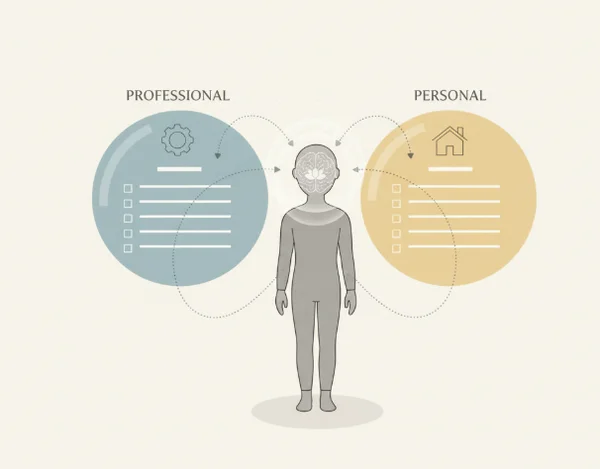
Many people notice a strange split in themselves. At work they seem calm, useful, and socially aware. At home they become short, withdrawn, defensive, or emotionally tired much faster. That gap can feel fake or embarrassing.
In reality, context changes how emotional skills show up. A fast EQ self-assessment can reveal helpful patterns, but no score can explain those patterns well unless work and home are both part of the picture.
This article explains why EQ can look different across settings. It also shows what that shift does and does not mean, and how to use the result without turning it into a character judgment. Disclaimer: The information and assessments provided are for educational purposes only and should not replace professional medical advice, diagnosis, or treatment.
What Context-Specific Emotional Intelligence Really Means
Emotional Intelligence Is Made of Multiple Skills, Not One Mood-Proof Trait
People often expect emotional intelligence to feel steady everywhere. Most research frameworks treat it as a cluster of skills instead. Self-awareness, regulation, empathy, motivation, and social interaction can rise and fall together, but they do not have to.
A 2005 [PubMed review of 33 studies] supported a multidimensional view of emotional intelligence across several self-report measures. That matters because a context gap does not always mean the test is wrong. It may mean one set of skills is stronger, easier to access, or more rewarded in one environment than another.
A 2006 [PubMed study with 223 community participants] also found only partial overlap between performance-based emotional intelligence tests and self-report measures. In plain language, emotional intelligence does not appear the same way in every kind of assessment. That makes it more believable, not less, when someone looks highly regulated in meetings yet struggles more in private relationships.
Different Settings Reward Different Emotional Habits
Work often provides scripts. Meetings have time limits, professional norms, and clearer roles. Home rarely does. Family history, unfinished arguments, intimacy, and daily fatigue all remove the structure that helped at work.
That is why a person may look composed in one setting and frayed in another. The emotional skill did not vanish. The conditions around it changed.
This also helps explain why people can misjudge their own EQ. If most daily validation comes from one setting, the person may assume that same level of regulation, empathy, or listening will appear everywhere. A mixed result can be uncomfortable, but it often reveals a more honest picture than a simple label ever could.
Three Reasons EQ Can Shift Between Work and Home
Structure and Scripts Support Regulation at Work
Professional settings often reward planning, restraint, and delayed reaction. There is usually a task to focus on, and that task can help organize behavior.
At home, the task disappears and the raw relationship stays. A 2021 [PubMed-indexed study on emotional intelligence and perceived stress] found a negative correlation between emotional intelligence and perceived stress. That does not mean every home interaction is stressful in the same way. It does support a practical point: when stress rises, certain emotional intelligence skills can weaken faster than others.
Emotional History Makes Home Reactions Less Filtered
Home is where old patterns usually live. People bring family roles, long memory, and unresolved expectations into personal relationships. That makes reactions faster and less edited.
A partner, parent, sibling, or child can trigger feelings that a coworker never touches. Someone with solid workplace empathy may still become rigid at home because the emotional stakes feel older, deeper, or harder to control.
Feedback Loops Differ Across Professional and Personal Roles
At work, poor emotional behavior often gets cleaner feedback. A missed cue can affect a project, a meeting, or a client interaction. That makes the cost more visible.
At home, the feedback loop is murkier. People may avoid naming the problem, repeat the same conflict, or assume the other person should already understand. Without clear feedback, one weak EQ domain can hide in plain sight for a long time.
How to Build EQ That Travels Across Settings
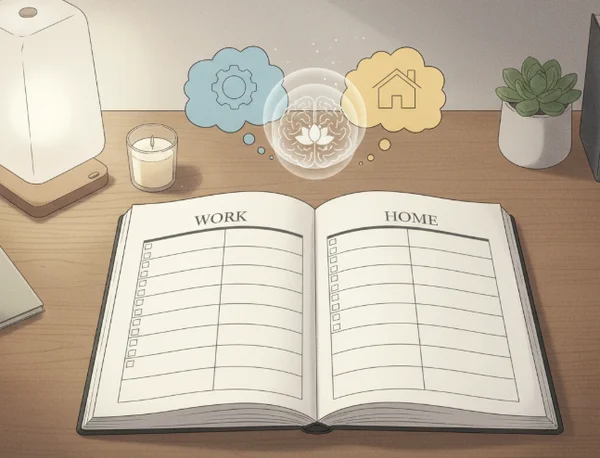
Track One Trigger at Work and One Trigger at Home
The most useful next step is comparison. Write down one work situation and one home situation each week. Note the trigger, the first feeling, the first action, and what helped or hurt the interaction.
That side-by-side pattern is more helpful than a vague promise to be better everywhere. It shows whether the same domain breaks down in both settings or whether the gap is more context-specific than it first seemed.
A small pattern log also lowers the risk of overreacting to one bad night or one tense meeting. Instead of asking whether your EQ is good or bad, ask a narrower question. Where does it hold up, where does it wobble, and what usually happens right before the shift? That question leads to better practice.
Use Your Test and AI Report as a Reflection Cycle
A guided emotional intelligence test can give structure to that review. An AI growth report can then help turn the weak spot into concrete practice, such as naming a feeling earlier, slowing a reaction, or asking one clarifying question before defending a position.
After a few weeks, compare the next result with real examples instead of with wishful thinking. That makes the score more honest and more useful.
If emotional overload, severe anxiety, persistent low mood, burnout, or relationship breakdowns keep showing up, another quiz should not be the only support. Talk with a licensed mental health professional, counselor, or another qualified clinician offline. Seek immediate help or contact emergency services if distress feels overwhelming or safety is at risk.

Key Takeaways and Next Steps
EQ does not have to look identical at work and at home. Different settings reward different habits, expose different triggers, and create different stress loads. A context gap is not proof of failure. It is information about where support, structure, and practice are needed.
Use a context-aware EQ tool to spot the pattern, then compare that pattern against real situations in both settings. Growth becomes more believable when the score and the lived examples start to move together.